

The evidence to save before filing a consumer protection claim depends on what happened, but the same principle applies across many cases: preserve the records that show who did what, when it happened, what you were told, what you paid or lost, and how you responded. At Justice Consumer Law, we would rather review a clean timeline supported by original records than a long narrative with no documents behind it. For debt collection, credit reporting, debt relief, robocalls, and other consumer matters, emails, contracts, account statements, credit reports, call logs, letters, screenshots, and dispute records can turn a confusing experience into an organized factual record. Save first, sort second. Do not delete inconvenient messages or alter files simply because they seem unimportant.
Build Evidence Around the Elements of What Happened
Good evidence does not mean saving every piece of paper you own. It means preserving records that connect the business, collector, creditor, bureau, or other party to the conduct you are concerned about.
Contracts, enrollment documents, and disclosures
If the problem involves a debt-relief, credit-repair, financial-service, subscription, or other contractual relationship, save the signed agreement, electronic disclosures, fee schedule, cancellation terms, sales presentation, welcome email, and any version of the terms you received. Do not rely on the current website to recreate what you saw months earlier.
Payment and account records
Save bank statements, card statements, invoices, receipts, payment confirmations, fee withdrawals, settlement statements, creditor balances, and account histories. These records can show what money moved and when.
Preserve original files before annotating them
Keep an untouched copy of each PDF, image, audio file, or email export. If you want to highlight or add notes, make a duplicate and work from that copy.
Save Communications in Their Original Form
Communications often establish representations, demands, disputes, and notice. Preserve the complete exchange rather than a cropped sentence that loses context.
Emails, texts, letters, and portal messages
Save full email threads with dates and sender information, text-message screenshots showing the number and timestamp, letters with envelopes where useful, and messages from online account portals. If a company changes or closes an account, portal messages can become difficult to retrieve later.
Calls and voicemails
For debt-collection or robocall issues, keep call logs, voicemail files, screenshots of repeated numbers, and notes identifying the date, time, number, representative, and substance of the call. Our debt collector harassment page explains why documenting collection communications can matter.
Do not secretly record calls without checking applicable law
Recording-consent laws vary. A written call log and saved voicemail can preserve useful information without creating a separate legal issue. If you are unsure whether a recording is lawful where the call occurs, get legal guidance before recording.
Credit Reporting Claims Need a Paper Trail of the Dispute
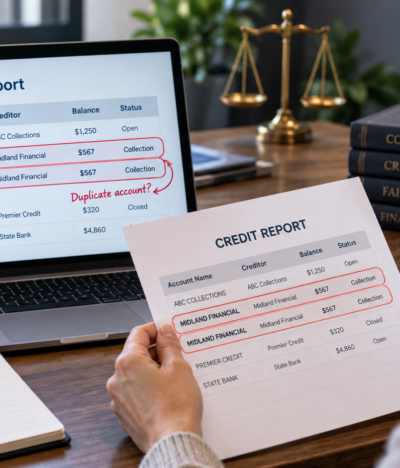
For an FCRA problem, the credit report alone is only the starting point. Save what you sent to the bureau or furnisher and what happened afterward.
Keep before-and-after credit reports
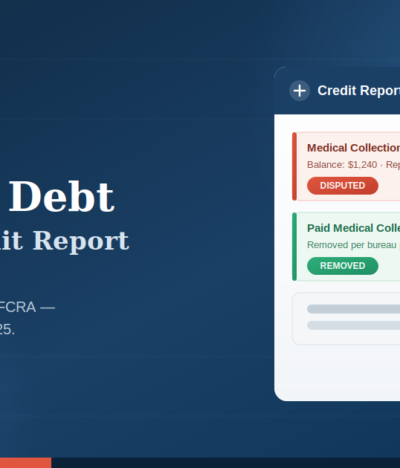
Save the report showing the disputed entry and later versions showing whether it was corrected, deleted, changed, or reinserted. Our FCRA legal-help page and credit-report error page describe the types of credit-reporting problems we handle.
Keep every dispute and response
Preserve dispute letters, attachments, certified-mail receipts, online confirmations, investigation results, furnisher responses, and correspondence identifying the account. A chronological file can show exactly what information was provided before the reporting continued.

Document the Consequence, Not Just the Conduct
If you believe the conduct caused a financial or employment consequence, save records that connect the event to that result. The existence and scope of any legal claim depend on applicable law and the facts, so do not assume that every inconvenience creates recoverable damages.
Save denial and adverse-action notices
Keep credit denials, housing denials, employment background notices, loan-pricing notices, account closure letters, and other documents explaining a decision. If there were extra costs, save statements or invoices that show the amount rather than estimating it from memory.
Create a contemporaneous timeline
Write down key dates while they are still fresh. Identify the first contact, contract date, payment dates, dispute dates, responses, reporting changes, and the event that caused you to seek help. A timeline is most useful when it points back to preserved documents.
How We Use an Organized Evidence File
Justice Consumer Law handles consumer protection matters involving debt collection, credit reporting, debt relief, and related federal and state-law issues. During a free case review, we can evaluate the documents against the legal issue rather than asking you to reconstruct events from memory.
Keep the file complete even if some evidence seems unfavorable
Do not discard records because they appear to support the other side. A complete file allows us to assess strengths, weaknesses, context, and chronology accurately. Selective records can create avoidable surprises later.
Conclusion
Before filing a consumer protection claim, preserve contracts, communications, payment records, reports, disputes, call evidence, and documents showing the consequence of the conduct. Keep originals, create a timeline, and organize the file by date. Justice Consumer Law can then review what actually happened and explain potential next steps. This information is general and not legal advice.
Frequently Asked Questions
These common questions can help you organize the issue before you decide what to do next.
Should I delete duplicate screenshots or repeated emails?
Keep the clearest original records and avoid deleting anything that could show timing, sender information, or context until the matter has been reviewed.
Are screenshots enough evidence?
Screenshots can be useful, but preserve underlying emails, PDFs, portal downloads, statements, and metadata where available.
What should I save from debt collectors?
Keep letters, voicemails, call logs, text messages, emails, validation notices, payment demands, and any dispute or cease-communication correspondence.
What should I save for a credit-reporting problem?
Preserve the reports before and after the dispute, dispute letters, supporting attachments, proof of delivery, investigation results, and adverse-action notices.
Should I organize evidence before contacting a lawyer?
A simple chronological folder is helpful, but do not delay a time-sensitive legal review just because your documents are not perfectly organized.
Can Justice Consumer Law review my documents before I file anything?
Yes. You can request a free case review and provide the records needed to evaluate the consumer-protection issue.