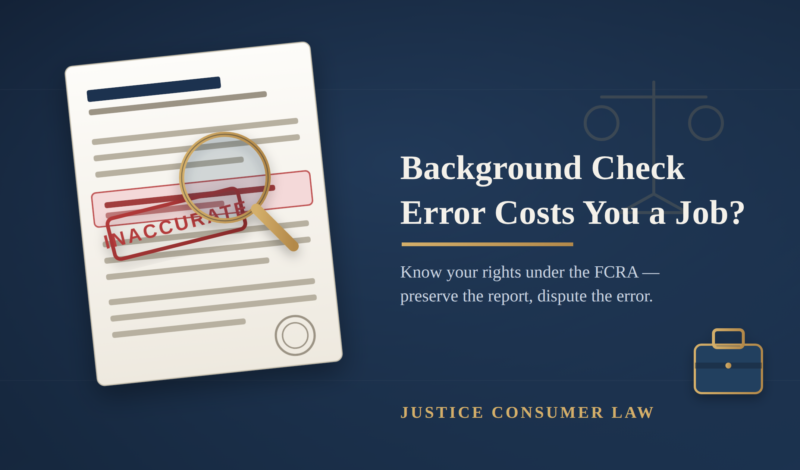

When a background check error costs you a job, move quickly to preserve the report, the employer’s notices, and the documents that show the information is wrong. Employment background reports can qualify as consumer reports under the Fair Credit Reporting Act. When an employer uses a third-party consumer report for employment, federal law gives applicants and employees important rights before and after adverse action based on that report.
At Justice Consumer Law, we look at both sides of the problem: whether the background screening company reported inaccurate information and whether the required employment-reporting process was followed. A lost opportunity is serious, but the legal analysis depends on the actual report, the notices you received, and what happened after you challenged the error.
Start With the Report That Triggered the Decision
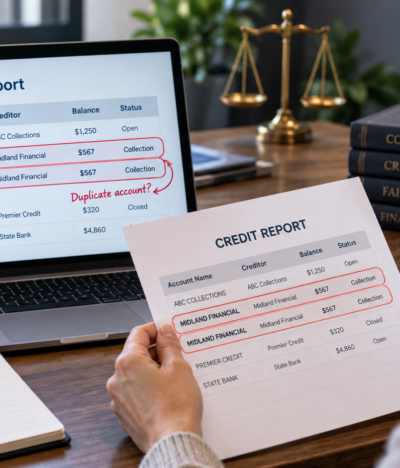
Do not begin by arguing with a recruiter about information you have not seen. Get the actual background report and identify the entry that appears wrong. Common problems can involve another person’s criminal record, an incorrect case disposition, outdated information, inaccurate employment history, or data that does not belong to you.
Save the pre-adverse action materials
Before an employer takes an adverse employment action based on a third-party consumer report, the FCRA generally requires the employer to provide a copy of the report and a summary of FCRA rights. Save the email, letter, attachment, date, and any portal message through which those materials were provided.
Compare the report with primary records
If a criminal or court record is wrong, obtain the official court disposition or other reliable record that demonstrates the error. If the report belongs to someone else, gather identifying documents that distinguish you from that person. If the error concerns employment history, save payroll, tax, HR, or separation documents that support the correct dates and status.
Do not alter the evidence
Keep original PDFs, screenshots, emails, and attachments. Create working copies for highlighting, but preserve the unmodified files and dates so the sequence of events remains clear.
Dispute the Error With the Background Screening Company
A background screening company that prepares employment consumer reports is subject to FCRA requirements. Your dispute should identify the exact item, explain why it is inaccurate or incomplete, and include the strongest supporting documentation you have.
Make the dispute specific
Avoid a broad statement such as ‘my background check is wrong.’ Identify the record, jurisdiction, employer, date, disposition, person, or other field at issue. State what the report says, what the correct information is, and what document proves the difference.
Tell the employer you are disputing the report
If the hiring process is still open, notify the employer promptly that you dispute the background report and provide concise supporting information where appropriate. The pre-adverse action process exists in part to give a worker an opportunity to review and respond to negative information before a final decision is made.
Preserve the final adverse-action notice
If the employer ultimately denies the job based on the report, save the final notice and any explanation identifying the consumer reporting agency. That material can help establish the timeline and the role the report played in the decision.

Separate an Employer Process Problem From a Reporting Error
A background-check case can involve more than one issue. The employer’s obligations concerning disclosure, authorization, pre-adverse action, and final adverse action are distinct from the screening company’s duties concerning the accuracy of the report. The facts need to be sorted carefully.
Ask what information actually caused the job loss
Save statements from the recruiter or employer showing that the background report affected the decision. If you received only a vague rejection, do not assume the report was the reason without evidence. The strongest record ties the inaccurate item to the employment decision.
Check for a mixed-file problem
If the report contains another person’s information, the same underlying data-matching problem can also affect credit files. Our explanation of mixed credit files shows why similar names and identifiers can lead to information being assigned to the wrong consumer.
How We Evaluate Background Reporting Problems
Justice Consumer Law handles Fair Credit Reporting Act matters involving consumer reports and inaccurate information. Our FCRA legal-help page explains our broader credit-reporting practice. When a background check has affected employment, we review the report itself, the dispute, the employer’s notices, the screening company’s response, and evidence of the lost opportunity.
Bring a complete timeline
Organize the job application date, authorization, background report, pre-adverse action notice, dispute, supporting documents, employer communications, and final decision in chronological order. If you want us to review the matter, you can request a free case review.
Conclusion
When a background check error costs you a job, the report and the timeline matter. Get the report, document the precise error, preserve the employer’s notices, dispute with the screening company, and save proof that the report affected the employment decision. Justice Consumer Law can review those records and explain whether the facts raise an FCRA issue. This content provides general information, not individualized legal advice.
Frequently Asked Questions
These common questions can help you organize the issue before you decide what to do next.
Can an employer use a background report without my permission?
When an employer obtains a consumer report from a background reporting company for employment purposes, the FCRA generally requires a disclosure and written permission before obtaining the report.
What should I receive before an employer rejects me because of a background report?
Federal guidance states that before adverse action based on the report, the employer generally must give you a copy of the consumer report and a summary of your FCRA rights.
Who should I dispute a background check error with?
Dispute the inaccurate information with the background screening company that prepared the report and preserve any supporting primary records.
What if the criminal record belongs to someone with a similar name?
Gather documents showing the record belongs to a different person and identify the mismatched identifiers. That can indicate a data-matching or mixed-file problem.
Should I save the job rejection email?
Yes. Preserve the rejection, pre-adverse action notice, final adverse-action notice, recruiter messages, and any statement connecting the report to the hiring decision.
Can Justice Consumer Law review a background-report problem?
Yes, we handle FCRA matters. A free case review can focus on the accuracy issue, the dispute history, the employer’s notices, and the employment consequence.