
To dispute medical debt that does not belong on your credit report, first determine why the entry is wrong. The account may belong to someone else, may have been paid, may show the wrong balance, may be tied to an insurance or billing error, or may fall within a nationwide credit-bureau policy that excludes certain medical collections. At Justice Consumer Law, we separate those issues instead of treating every medical collection the same. The CFPB’s broader 2025 rule that would have removed medical debt from credit reports was vacated in July 2025, so it is inaccurate to say that all medical debt is now federally prohibited. Your dispute should focus on the facts of your account, the reporting policy that applies, and your rights under the Fair Credit Reporting Act.
Identify Why the Medical Collection Should Not Be There
Medical billing creates several layers of records: provider charges, insurance adjustments, patient responsibility, collection accounts, and credit reporting. A useful dispute begins by identifying which layer contains the error.
The debt is not yours
If you never received the treatment, the patient was someone else, or the account belongs to another consumer with a similar name, state that directly. Compare the provider, date of service, account number, address, and identifying information. A medical tradeline that belongs to another person may also point to a mixed-file issue or identity-theft problem.
The amount or payment status is wrong
Compare the reported balance with itemized bills, explanations of benefits, payment receipts, provider statements, and collection letters. A dispute is stronger when it identifies a concrete discrepancy rather than simply saying the charge feels unfair.
The collection may fall within bureau medical-debt policies
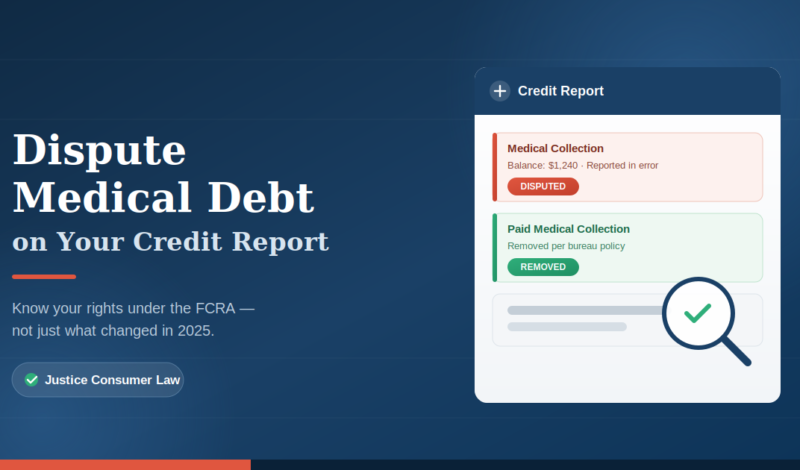
The three nationwide credit reporting companies adopted policies removing paid medical collections, medical collections less than one year old, and medical collections with initial balances under $500. These are reporting-policy changes, not a blanket federal ban on all medical debt.
Dispute the Medical Debt With the Credit Bureau and Furnisher
The CFPB recommends disputing credit-report errors with both the credit reporting company and the company that furnished the information. For a medical collection, the furnisher may be a collection agency rather than the health-care provider itself.
Write a fact-based dispute
Identify the bureau, collection account, balance, original provider, and exact reason the reporting is inaccurate or should not appear. Attach copies of the documents that support your position. If the debt is not yours, say so. If it was paid, attach proof. If the balance is wrong, show the correct balance. If it falls within a bureau medical-collection policy, identify the facts that place it within that policy.
Keep medical information limited to what is necessary
You may need billing or insurance records to prove the error, but avoid sending unrelated medical history. Focus on documents necessary to establish identity, payment, coverage, account status, or the reporting mistake.
Preserve the full dispute file
Save the report, dispute letter, attachments, proof of delivery, online confirmations, and investigation results. If you speak with a collector or provider, note the date, number called, representative name, and what was said.

What the Current Medical-Debt Rules Do and Do Not Mean
Medical-debt reporting has changed substantially, which makes outdated advice especially risky. The CFPB finalized a rule in January 2025 intended to remove medical bills from certain credit reports used by lenders, but a federal court vacated that rule in July 2025. As a result, you should not rely on the claim that federal law now excludes every medical debt from every credit report.
Some medical collections are still excluded by bureau policy
Current CFPB consumer guidance states that unpaid medical debt greater than 365 days delinquent from the date of service and over $500 could appear on credit reports. Paid medical collections and certain lower-balance or newer medical collections are treated differently under the nationwide bureaus’ announced policies.
An invalid debt can still be disputed
Separate from those policies, the FCRA dispute process applies when information is inaccurate or incomplete. That means an account that is not yours, reports an incorrect balance, or reflects incorrect account information can be challenged based on the underlying error. Our FCRA and credit-reporting legal-help page explains the broader dispute framework.
How Justice Consumer Law Reviews Medical Credit Reporting
We look at the credit report, provider and collection records, insurance documents, dispute correspondence, bureau investigation results, and what happened after the dispute. Our credit-report error practice page covers the type of reporting problems we evaluate.
Bring the documents that connect the billing issue to the tradeline
The most useful file usually includes the report showing the collection, itemized bills, explanation-of-benefits statements, payment records, collection letters, dispute copies, and updated reports. If the problem remains after a documented dispute, request a free case review so we can examine the reporting history.
Conclusion
Disputing medical debt requires more than saying a medical bill should not affect your credit. Identify why the tradeline is wrong or excluded, support that reason with documents, dispute with the bureau and furnisher, and verify the result on an updated report. Justice Consumer Law can review persistent medical credit-reporting errors under the FCRA. This article provides general information and is not legal advice.
Frequently Asked Questions
These common questions can help you organize the issue before you decide what to do next.
Is all medical debt banned from credit reports?
No. The CFPB’s 2025 rule that would have broadly restricted medical-debt reporting was vacated in July 2025. Separate nationwide-bureau policies still exclude certain medical collections.
What medical collections do the nationwide bureaus generally exclude?
Their announced policies removed paid medical collections, collections less than one year old, and medical collections with initial balances under $500.
What if the medical bill belongs to another person?
Dispute it as information that is not yours and provide documents that distinguish your identity from the person associated with the account.
Should I dispute with the hospital or the collection agency?
For credit-reporting purposes, identify the company furnishing the tradeline. You can also address billing errors with the provider or insurer, but the credit-report dispute should reach the bureau and relevant furnisher.
What proof helps with a paid medical collection?
Keep receipts, account statements, provider confirmations, settlement records, and any correspondence showing the balance was paid or resolved.
When should I ask Justice Consumer Law to review the issue?
Consider a free case review when inaccurate medical debt remains after a documented dispute, returns after deletion, or causes a concrete consumer-reporting problem.